Although I’m still Husbanding my Resources, I want to eat healthy food. I like to cook from scratch, using fresh ingredients. Nothing processed. Well, hardly anything processed – I like my pizza on a Friday night…
But surely everything we eat has been processed in one way or another? My fresh chicken was killed and plucked, its innards were removed, it was wrapped and kept in a temperature-controlled environment. Even my potatoes have been washed and put into a bag.
Nevertheless I would still maintain that I don’t eat a lot of processed food. That’s because when we talk about processed food we don’t mean, ‘food that has been through a process’.
I think we mean food that has come a very long way from being recognisable, and on the way has lost a lot of its nutritional content and general goodness.
Let’s call it ‘industrialised food’.
There is indeed a whole industry out there whose sole purpose is to part you from your cash in return for cheap food that tastes so good that you forget yourself. They want you to eat a lot of it, so that they make lots of money. They don’t care about the effect it will have on you. And if you eat a lot of it, it will have an effect on you.
BUT industrialised foods are convenient, they have a long shelf life, they taste nice and they’re cheap – so what’s so bad about them?
- They contain a high proportion of things that are bad for you – salt, sugar, high fructose corn syrup, artificial preservatives, artificial colourings, artificial flavourings. Even artificial texture. They’re high in refined carbohydrates and trans fats.
- They’re low in the things that are good for you – nutrients and fibre.
- They’re designed to taste good so that we eat lots. That’s how the manufacturers make their profit. No-one likes unsalted crisps – but put some salt on them and we can eat a whole big bag at a sitting.
Look at the label. Having a label at all is a bit of a giveaway – bananas don’t have a label, carrots don’t have a label. If it has a label that lists the ingredients, read it. How many of those ingredients could you go and buy at your supermarket? How many do you even recognise as foods?
Here’s a quick tip – the ingredients have to be listed in order of quantity – so the ingredient used in the largest proportion is listed first. If the ‘non-food’ ingredients feature towards the top of the list, then you can be pretty sure the food isn’t good for you – in fact I would go so far as to say it isn’t really food at all.
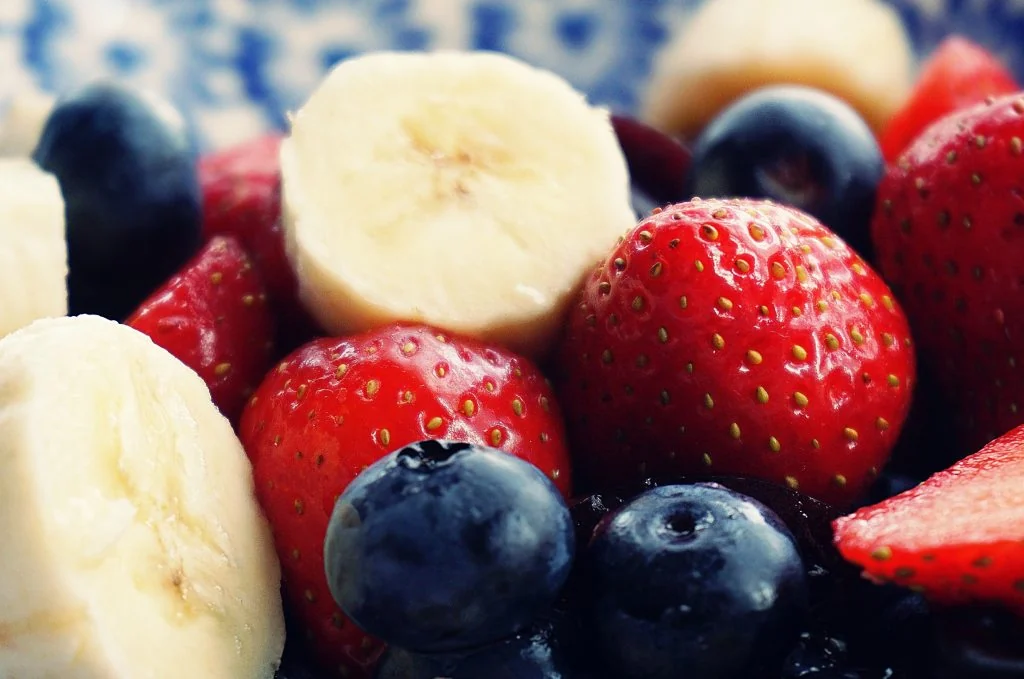
Another way of thinking about it is this – how far has it come from its natural state? A punnet of strawberries is a punnet of strawberries. A smoothie is a little way removed from the original, but you could make one at home, so it’s not too bad. A fruit winder is further down the road – I wouldn’t know where to begin to make something like that. And strawberry laces are off the map entirely.
So – bottom line is, go for the real food every time. If you can’t get real food, go for something that isn’t too far removed from the real thing – something where the ingredients are mostly things that you could buy and prepare yourself if you had the time.
Avoid eating ‘food’ that doesn’t contain much actual food when you read the label. It’s not real, it’s not good for you.
Why would you eat something that wasn’t good for you?
Scroll all the way down to Follow, Share, Like or Comment on this. And check out my ‘Sixty and Me’ badge.
I always reply to Comments from nice people.
Photo by Suzy Hazelwood from Pexels